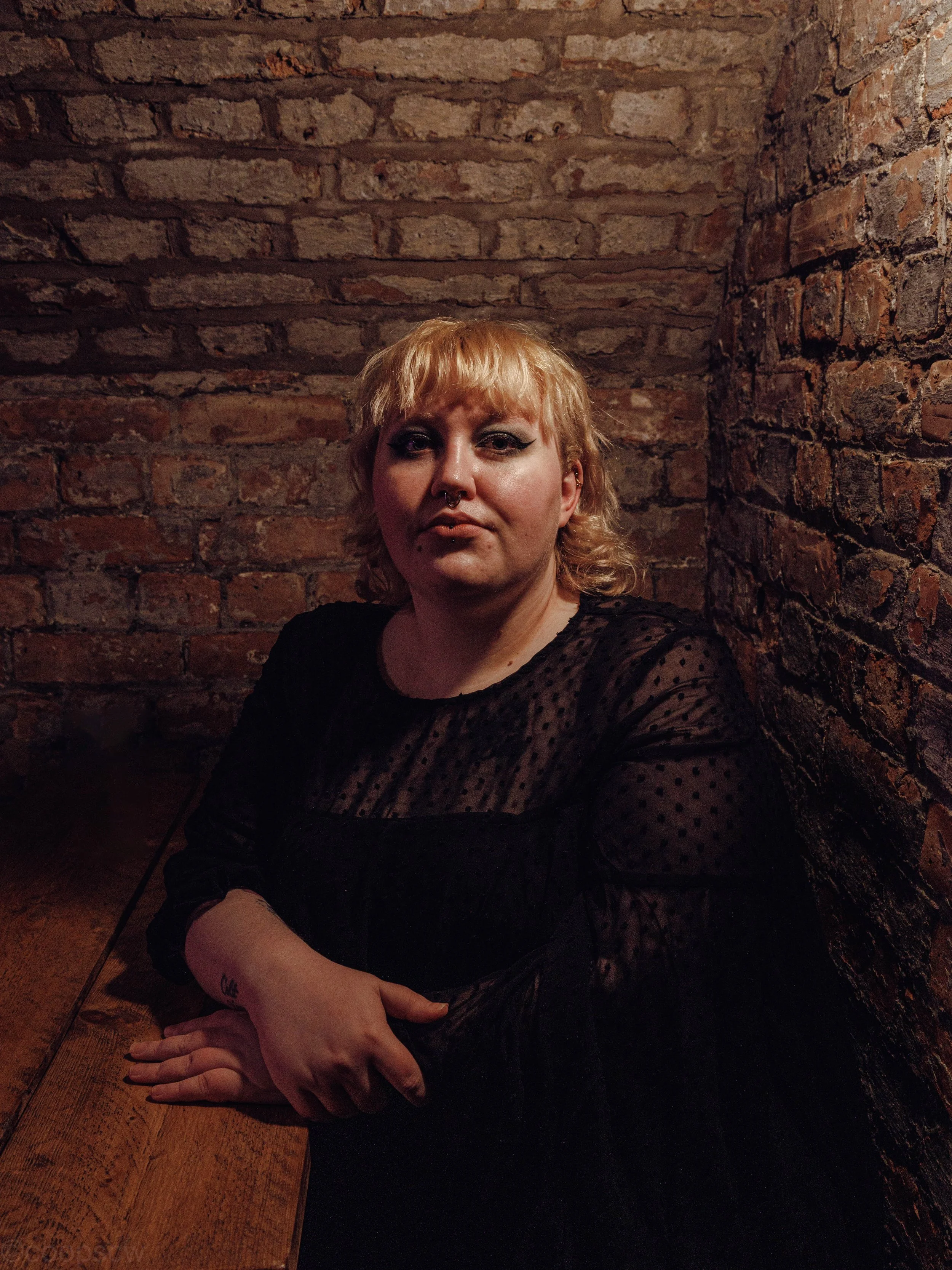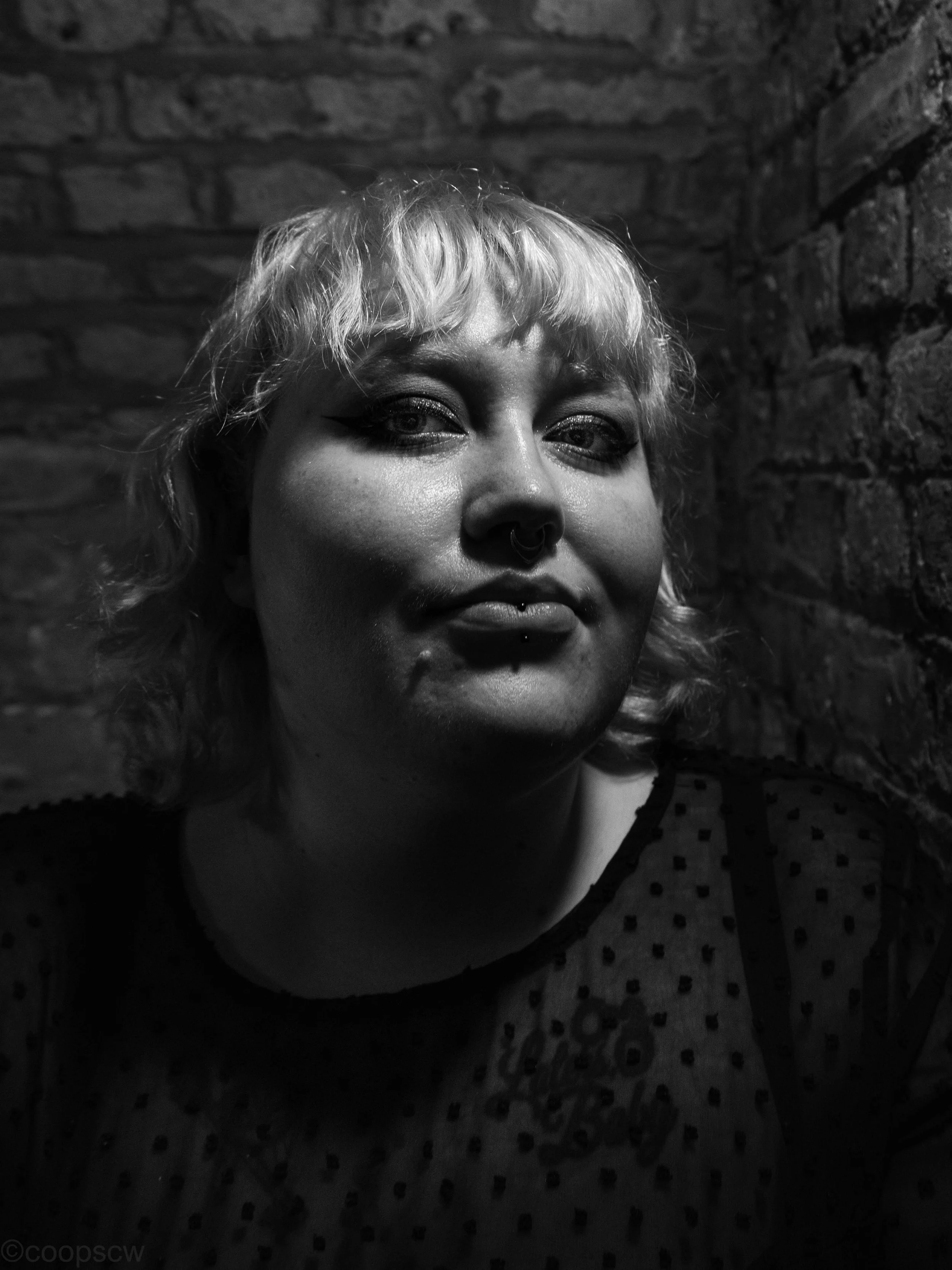
My name is Ivy Sellers.
I’m from Manchester, UK. I chose to share my story as part of my healing journey after meeting Lee at my university, where he gave a talk about Victorious Voices. We began talking about our pasts, which helped me open up and encouraged me to develop a photographic artwork for my end-of-year project. By sharing my experiences, I hope to help others who have been through something similar to seek support, open up and form genuine connections.
I was sexually abused on multiple occasions from a very young age, and the abuse continued until I was 19. The first time it happened, I was in primary school, and the perpetrator was one of my mother’s friends. A second perpetrator was a family member who repeatedly sexually abused both me and another girl. This experience was very traumatic. I remember I used to hide under my bed in terror, knowing he would come looking for me. He would open the door and say my name: “Elisha, Elisha, where are you?” This would put the fear of God into me. There were times when he would put his hands up my top and grab my breasts or put his hand down my pants and touch my private parts.
The abuse fragmented my memory, and what happened was covered up. I felt vindicated when, a couple of years ago, I received confirmation that the abuse had happened. I experienced emotional flashbacks, including moments when I could feel his nasty breath on me and relive the terror I had felt. There were times when he took photographs of me and became angry if I tried to cover myself. He gave me money and sweets, but told me that if I spoke to anyone, he would say I had been a bad girl and that no one would listen to me.
I tried to tell someone while it was happening, but they laughed and said, “Why would a man touch someone like you?” I never told anyone again for years after this. I have come to understand that people do not talk enough about the effects of childhood sexual abuse or how it affects survivors’ relationships with themselves and others.
I first started to open up about my past when I talked about what happened to me in a girls’ group to help protect girls from being groomed. As I had locked the abuse away in my mind, I began to hear and see disturbing things connected to what I had suppressed. It got bad, and at one point, I saw distressing images of myself hurting people and heard thoughts or voices about harming others. This would make me withdraw and go into my head more, where I would only see more of my past.
Eventually, I told my friend about what was happening, and then my tutor. This led me to seek professional support, and I received a diagnosis of complex post-traumatic stress disorder (C-PTSD) related to the abuse. At first, this really scared me because it led me to believe I was broken, and I was very hard on myself. After a while, I realised this was not a fair way to treat myself and started to channel my feelings into creativity.
At university, I began developing a photographic project exploring my childhood, intending to use the work to help me heal. During one class, I met Lee Cooper, who spoke about his experiences of childhood sexual abuse and the Victorious Voices project. I spoke to Lee after the presentation, and we began talking about our experiences. He was the first man I had ever trusted enough to tell what had happened to me. His willingness to listen, when others had chosen not to or had looked at me with disgust, helped me greatly. He spoke to me without judgement. In turn, this helped me understand that I was neither dirty nor disgusting, which is how I had felt for a long time. It helped me see myself as a human and not a creature. Lee helped me see that what I experienced was not my fault and that there are people out there who will listen to me.
My first steps towards healing began when I was supporting a friend who was being abused at home. She shared her own history of sexual abuse, which enabled me to tell her what had happened to me. Eventually, I also told her that I was seeing and hearing things. For once, someone listened. She helped me speak to my tutor, opening the door to mental-health support and a diagnosis of C-PTSD. I felt such a huge weight leave my body, realising that I was not psycho.
Initially, self-harm was the only coping mechanism that seemed to help. With therapy, however, I have developed other ways of coping. My therapist taught me to revisit a memory and imagine placing a protective person or figure there before anything bad happened. For example, I imagined Rhea Ripley, a WWE wrestler, delivering a roundhouse kick to my abuser before he could touch me. This was the first time I ever laughed at a bad memory, and this technique did help me to partly manage my flashbacks and night terrors.
I would say I have a good support network around me now. My friends help keep me occupied and support me when I feel at risk of self-harming when things get bad. The family members I still have make sure I am safe and help me when I experience episodes. They never stop reminding me I’m worth everything. My therapy is ongoing, but my therapist has been a big part of helping me manage the effects of the abuse and the mental-health difficulties that developed over time. Through the RESTART project, which supported people vulnerable to psychosis, I gained access to eye movement desensitisation and reprocessing (EMDR). Because I am autistic, I later participated in a similar trial focused on changing how I responded to traumatic memories and developing new coping mechanisms.
I have reclaimed my identity by learning to trust men again and to see myself as human, rather than as a used, dirty creature. I’ve also been able to talk about my past without feeling like I was the cause of what happened. I have developed a few self-care practices that have become important to me during my healing. I like to make sure I have the right people around me who are loving and protective. It’s good to have a friend who will be there for me and understand what I have been through. Every day, I remind myself that what happened was never my fault, and I distance myself from anyone who suggests otherwise.
A true turning point in my recovery journey was meeting Lee at the talk he gave at my university. Listening to him speak about his own experiences, I came to the realisation that childhood sexual abuse is not talked about enough because it’s a taboo subject that makes people uncomfortable. Helping a friend who needed support also made me realise that I needed to address my own experiences.
My journey has been full of setbacks and challenges; I ended up with a lot of flashbacks and panic attacks whilst trying to heal. I have now forgiven myself, and I no longer blame myself. I have also partly forgiven my abusers to help myself heal, but I don’t think I will ever forgive my mother.
To other survivors of childhood sexual abuse, I would say: make sure you take care of both your mind and your body. It may be difficult to speak to someone, and finding the right therapist can be challenging, but please do not let that stop you. One form of therapy may not work for you, but others are available. If the people around you will not help, find someone who will. Relatives may close the door to healing and understanding, but people who do not yet know you may open another door and help you move towards a better place.
Never, and I mean never, think your abuse was your fault. If anyone says it was, then let them leave your life because people like this can cause further harm to your mental health. You are important. Never forget that you are free—not a bird trapped in a cage built from past experiences and memories.
Never stop fighting for what is right for you.