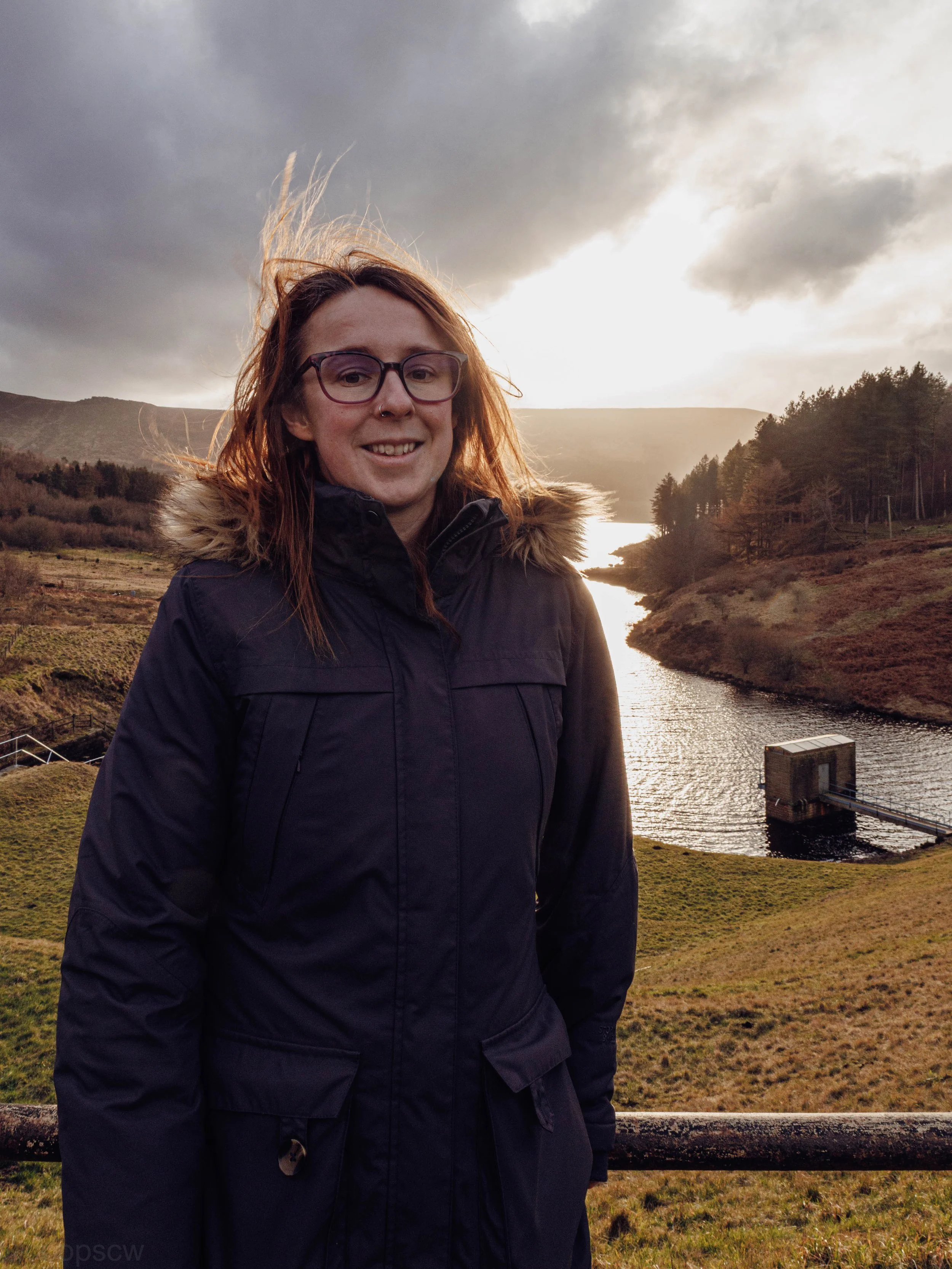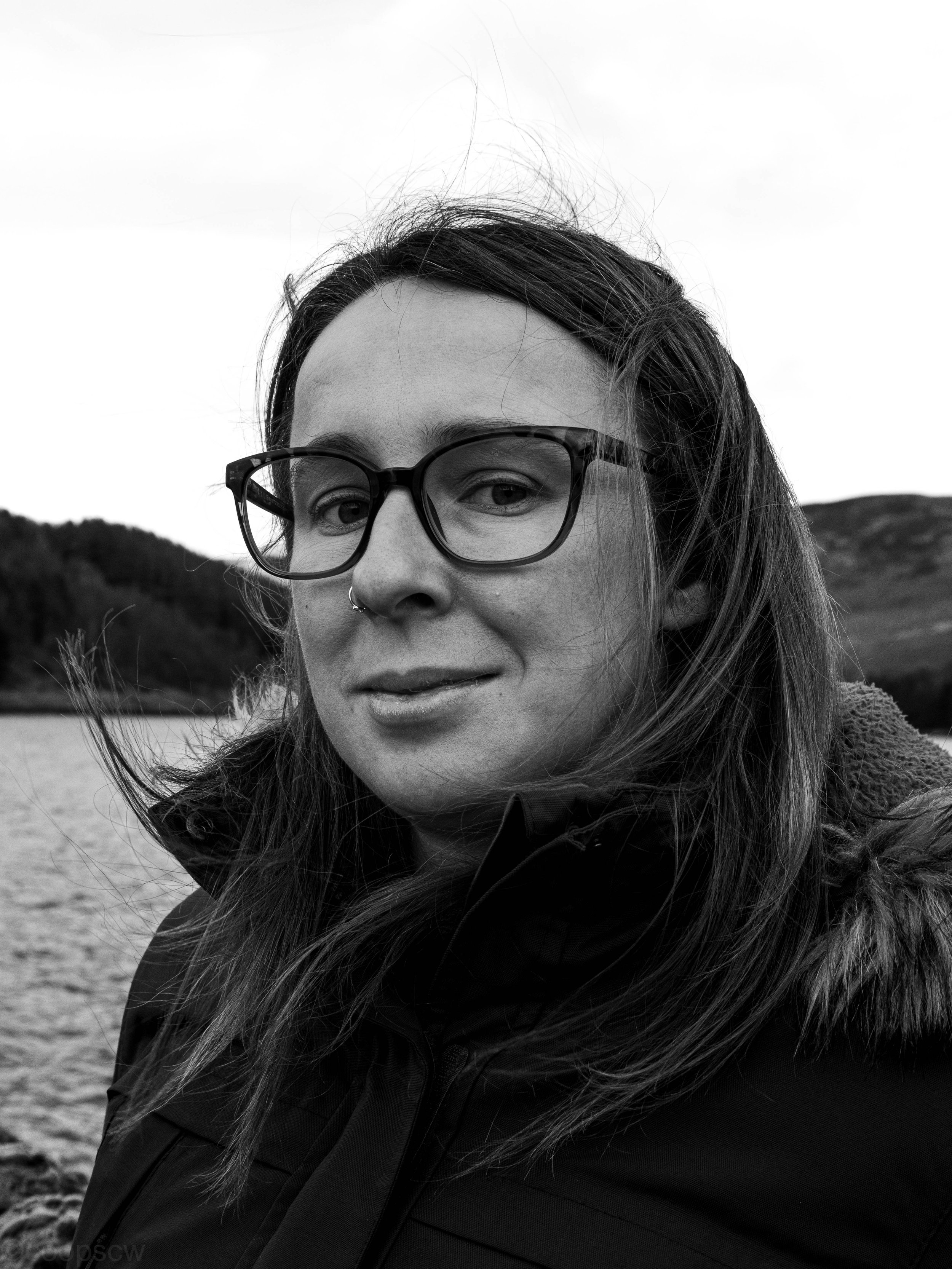
My name is Beth Mcmanus
I’m from Ashton-under-Lyne, Greater Manchester. Every survivor’s story is different, and sharing my story through Victorious Voices feels right to me: so that another survivor might see and read my story and feel less alone; so that someone supporting a survivor might hear it and understand just one per cent more; and so that the world may truly understand the lifelong impact of childhood sexual abuse (CSA) and the strength it takes to keep going in a world where barriers are constantly being placed in our way.
It is in silence that those who commit CSA remain protected – it is through breaking the silence and putting it into the spotlight that the world may learn and act to prevent more people from becoming victims. It may be too late to prevent what happened to me from affecting my life, but it is not too late to prevent others from experiencing a similar fate. I wouldn’t have actively chosen this path for myself, but if breaking the silence about what happened to me means that just one other survivor feels less alone, or prevents just one child from experiencing what I did, then it is most certainly worth speaking out.
At the age of nine, I innocently asked why men had penises and women did not. This was in the car on the way to a family member’s house. My parents hadn’t really explained to me why my body was changing at the time, and I was curious to understand. That’s how it all began: with a child being curious. An adult in a position of trust took the lead on answering the question, which led to him taking the lead on teaching me about the birds and the bees.
They bought me a book about it and each weekend when I stayed with them, we would eat a takeaway and watch a film. Then, at bedtime, he would sit beside my bed and go through the book with me. When we covered subjects such as masturbation, I was encouraged to touch myself while he was in the room. This progressed to him touching me and then introducing me to sex toys at the age of ten.
By then, I was also drinking alcopops before bed. This escalated to more and more intimate sexual experiences with him – he told me he loved me and I believed we were in a relationship, but somehow knew to keep it secret without him having to tell me. At the age of 12, what I then understood as sex began; I now understand that it was rape. This continued until I was 14 years old. My friends told me what was happening was wrong and I began to question how I felt about it all. When I had my first boyfriend, my abuser stalked and threatened us, which ultimately led to my family making him leave.
A few months later, I disclosed to my parents, encouraged by my boyfriend who was the first person I opened up to about it. I wrote them a letter and asked them to report it at the time. Sadly, after they saw the letter on the Saturday and had a short conversation with my sisters on the Sunday, it was largely a case of, ‘Off to school you go, and let’s forget about this.’ There was no action, no explanation and no offer to help me get support. It was shut down and I was expected to move on – do well at school and put it behind me.
It would come up from time to time in conversation, but I’d be told, ‘We just have to put it in a box in our minds and lock it back up.’ It was only after my mum sadly passed away in 2021 that a new culture of openness could emerge within our family and I could begin to heal. In the years before that, I experienced a myriad of mental health struggles. I entered another abusive relationship between the ages of 16 and 18, experienced psychosis for several months and almost took my own life, without really understanding why everything felt so chaotic and out of control. I struggled with healthy relationships because of so many beliefs that had become deeply embedded because of the abuse I had experienced.
When people think of CSA and rape, violent images may come to mind, but it is not always like that. Often, it involves the quiet manipulation of a child’s trust and need for attention over a long period. Sometimes it does not feel abusive or traumatic at the time– that comes later when the reality of what happened to you lands and lands heavily, burying you. Grooming does not always involve gangs or strangers; more often than not, it takes place in your own home and involves people you trust and think you know well.
The catalyst that led me to share my experience of abuse for the first time came when I was camping with my first boyfriend and his family, six months after it had ended, when I was 14. I don’t remember much about why it felt right to share it, but I remember sitting in the car, just me and my boyfriend, and telling him everything because he felt like a safe person to open up to. I was only just starting to understand that what I’d been through was wrong and strong enough to share with someone I trusted.
As mentioned above, it took many years for me to even fully understand what had happened to me, the impact it was having on my life and the further issues of being silenced within my family. That initial step of telling my boyfriend was the first time someone believed me and didn’t try to tell me to just ignore it and move on. Getting his support was the beginning of my healing.
It was only in my late twenties that I started trying to get help from several therapists. Unfortunately, the first few were unhelpful: they offered cognitive behavioural therapy (CBT) and tried to change the way I thought about the abuse, failing to acknowledge that what had happened to me was traumatic in itself.
A huge step in my healing process was learning effective ways to manage my anxiety – and also learning about and understanding why I was feeling and acting out in the ways I was. I was taught that breathing out for longer than I breathed in helped to activate the parasympathetic, or ‘rest and digest’, nervous system, signalling that I was safe.
By using guided imagery with my therapists and through meditation apps, I learnt that my imagination—which had felt as though it was constantly letting me down through flashbacks—could also be harnessed to help me heal. Over many months, I learnt to use my mind to take me to calm, relaxing places in nature. This later became a gateway to the therapeutic intervention that helped me reduce the emotional arousal associated with the abusive memories: the Rewind Technique.
I also use exercise to help keep my nervous system regulated. I mix running, spin classes and strength work, giving me an outlet for my attention and helping me burn off anxious energy. If I’m feeling worked up, I know I can take myself outside for a walk. Fresh air and daylight, together with focusing on my steps and what I can sense around me, are often enough to bring me back to the present and help me feel in control.
My first boyfriend was the first person in my support network, and I will be forever grateful for his patience and kindness while I was figuring things out. He taught me what genuine love and a healthy relationship looked like, even though I was unable to accept it at the time. My college friends helped me through the hard times by making me laugh, listening when I needed to talk and helping me leave my abusive partner at the age of 18. They didn’t all know what had happened to me before, but they showed me that I was worth something, just the way I was, accepting me without expectations that I would change or need to be anything other than what I was.
Following my mum’s passing and our family becoming more open, my dad and sisters have become some of my biggest supporters. They supported my decision to report in November 2023 and my decision to withdraw support for the case in 2025 because of the impact the justice system and process were having on my mental health.
Most of all, two therapists in particular have supported me. Debbie listened without judgement, allowed me to tell my story and patiently taught me effective ways to manage my anxiety. Kat, who works with other CSA survivors, has been a strong, reliable and steady presence, showing up for me week in, week out. Therapy helped me to put the timeline together in a way that’s linear. I now have story with a beginning, middle and end.
My husband has also been a huge support – even when I wasn’t supporting myself – he has stayed steady, loyal and strong even when I was pushing him away because I was scared of the love he was showing me. He has continued to love me and be there for me throughout all the years of confusion and self-discovery.
Human Givens therapy has helped me enormously by teaching me about my emotional needs, how they are as important as my physical needs and how CSA and trauma created barriers to meeting them. Through the two therapists I worked with, I was able to better manage my anxiety and day-to-day triggers, as well as process and remove the emotional strength behind my trauma memories using the Rewind Technique which has greatly reduced my triggers and emotional response to them.
I have also benefited from seeing creative work by other survivors through Viv Gordon Company, connecting with advocates through the Survivors Voices ‘Change Makers’ group and using resources from The Survivors Trust. A few books I’ve found helpful are:
No Matter Our Wreckage by Gemma Carey
The Flying Child by Patricia Walsh and Sophie Olson
Because It Didn’t Stop When It Ended by Patricia M. Wennell
These books showed me that I wasn’t on my own and that others understood what it was like to be a survivor in this world. They helped to break the sense of loneliness and isolation that had haunted my life for years.
Reclaiming my sense of identity and agency is an ongoing process and one I think will continue for the rest of my life, but that’s ok. Initially, as a teenager I would jump from one friendship group to another – at the time I couldn’t find my people but looking back I feel like it was all a part of learning who I was and having the autonomy to choose who I spent time with.
Going to university was a huge part of reclaiming my identity and agency, finally leaving the family home where some of the abuse had occurred, creating my own rules, routines and lifestyle. I focused on the people and activities I enjoyed and not just the ones my parents told me I should I explored different societies and groups, eventually focusing on my athletics as staying fit and healthy felt good, gave me an outlet for lots of unexpressed emotions and I met lots of wonderful people in the groups I trained with.
More recently, following the passing of my mother in 2021, I have truly reclaimed who I am and what I stand for. My mother was a huge influence over our family and our values, and that sadly included the culture of keeping quiet, not talking about difficult things and not upsetting anyone. Our family has changed since that influence has gone, our family has become more open. This has created opportunities to have the conversations I’ve needed to have in order to grow and learn who I am in the world as an individual and not just what I felt I “should” be. Through the work I have done both inside and outside the therapy room, I have finally built a life—my life and my story—and become the person I am today: someone able to accept love, have a healthy relationship and look towards my future as a mother.
Exercise and movement have always been important to me; I have been involved in athletics for more than 25 years. It gives me an outlet, has given me in the past something to focus on and work towards which I was in control of as well as help me to feel fit, healthy and well. I still run and use exercise today whenever I am stressed, anxious, overwhelmed or angry as it is a release for me. Even gentle stretching and yoga are important for me as this helps reconnect with my own body, in the here and now, especially following something triggering which can cause me to feel disconnected from myself – the mat is always there for me to return to, without judgement.
Daily journalling has also been helpful, ending my day by writing about the highs and lows, and sometimes just turning to pen and paper during difficult periods or to figure something out when I’ve felt stuck. Simply writing and reading it back has sometimes helped me to see things from different angles, allowing me the time and space to work through my emotions and thoughts. Being outdoors also helps: getting up and sitting in the garden with a cup of tea, watching the sunrise or simply soaking up the nature around me. It has always brought me back to the present and engaging all the senses helps keep the mind and body in the here and now. Hearing the birds singing and feeling a breeze on my face reminds me I’m here, I’m alive and I deserve to experience the joys life has to offer.
Doing the Coast to Coast walk solo, a 192-mile hike from St Bees to Robin Hood’s Bay, gave me a lot of time for reflection but also showed me something important – I was capable of doing and achieving things on my own. Each day I made the decision on which route to take and solved the problems that came up along the way, like being lost on the moorland or being chased by sheep. Until then, I had not believed in myself and had allowed others to take control and make decisions for me. I remember it being such a profound experience, I cried the last three days of it because over those twelve days I grew so much and didn’t want it to end.
Since 2021 I’ve come a long way in my healing and recovery because it isn’t a family secret anymore. I still wish things had been different and that I had been able to heal while my mum was still here, and I know she was doing the best she could and what she thought was right and protective for her family. I’ve learnt, however, that doesn’t mean my pain wasn’t real or that it was right to deny me access to justice when, at 14, I asked for it following disclosure – but we are all human and sometimes we make poor choices with the best intentions. I now sit with it all, the good, bad and ugly, and can just let it all be there and all be true.
In November 2023, I made the decision to report my abuse to the police. I’d been in therapy for about a year and was sitting in a shopping centre car park about to go to an exercise class. Something had triggered me and thoughts about CSA whirred around and around in my head. I was sobbing harder than I’d ever cried before wishing I could do something about it. Then I realised: I could do something. I could report what had happened. The tears stopped. I went to my class and reported it as soon as I arrived home. A weight lifted from my shoulders as I finally felt in my own power – for the first time I was standing up publicly and saying, “This happened to me, and it was wrong!”
Unfortunately, the justice system and process are not supportive of survivors – and although I met and worked with some brilliant people within it, I withdrew support for the case in September 2025 after learning it would likely be 2028 before I’d be in court. That decision was another turning point: ‘I have the power to withdraw my support for this case because he isn’t worth my time or energy anymore. I have a beautiful life to live and build, so I’m standing up and saying no more.’ It’s not that I don’t want justice, I just don’t want it at the cost it would exact from me– I am worth more than that.
I fell pregnant with my first child a couple of months after deciding to withdraw my support for the criminal investigation, which for me is a sign that it was the right one for me and my life. A new chapter awaits!
As life unfolds and what happened moves further into the past, it becomes increasingly clear that setbacks and challenges will always be part of life for a survivor because experiencing CSA touches every part of your life, often when you least expect it.
Some significant challenges that come to mind for me are:
Initial disclosure to my parents, writing them that letter and leaving it for them to find was the hardest thing to do because I was so scared it was all my fault. My boyfriend at the time was thankfully very encouraging, kind and without his support I wonder if I would ever have disclosed – he helped me overcome my fears.
Finding myself in the abusive relationship between the ages of 16 and 18 and realising I had to get out was really hard – I became very unwell mentally, having hallucinations and uncontrollable screaming fits (my body and mind were no longer my own). Again, I overcame this time with the support of my lovely friends who helped me keep my self-esteem intact enough to move away. A complete life change and going to university was the best thing in overcoming this challenge.
Being in a stable relationship with my now husband was a difficult and unexpected setback – he was kind, stable, patient and loving and something in me screamed danger when it wasn’t there. We separated and I ended up in a relationship with someone who was more distant because that felt like what I deserved. Through therapy and finally working on and processing my trauma with therapists who understood and had a model of therapy that helped heal, I slowly found myself back with my husband and able to accept and feel comfortable being with someone who valued me, loved me and expected nothing from me except to be myself. This took years of work in therapy, but was worth every moment.
My most recent setback was in summer 2025 when I discovered the delays occurring with my case It had been 18 months since I first reported the abuse. I’d had three different detectives take over my case and then move on to other things, and despite good evidence my case had been sent back from the CPS because they wanted more evidence—what felt to me like further delay My understanding was that everything was in progress. However, after hearing nothing for several weeks, being ignored when I sought answers and discovering that one piece of evidence was holding everything back, it all became too much and I reached crisis point. I could no longer sleep and this lasted weeks, flashbacks came back and I started to plan my suicide.
I found safety with my husband, moving back in with him so I didn’t have to face everything alone at 2 a.m. Little by little I focused on the little moments each day that felt a bit lighter – like sitting and watching the magpies at lunchtime or a conversation with a colleague at work that made me smile. I gradually opened back up to the outside world and focused on the things I could do: exercising, meditating and attending therapy. I remember visiting a friend in the Lake District and going on a hill walk. The sun was shining, and I felt thankful that I had chosen to stay and fight for my life. Things moved forward, the darkness lifted and I felt happy and peaceful again. At that point I decided to withdraw from the case because I wanted to take back my power that had been taken from me for too long. My abuser was no longer worth my time or energy, and I had a whole lot more life to live and things I wanted to do.
I don’t believe you have to forgive in order to heal – forgiveness is for those who deserve it – who stand up and say they recognise the harm they caused you, even if they didn’t intend to, and show genuine remorse. Even then, I do feel some actions remain unforgivable – especially when it has impacted a person’s entire life and sense of being in the world like CSA can and does. Everyone has a right to choose if forgiveness feels right for them.
I used to feel sorry for my perpetrator – did they just get it wrong, get confused and end up in a situation? But now I feel that CSA is never someone “getting confused” or stuck in a situation…it’s a choice. I don’t forgive him, I never will, and I’m ok with that. He showed no remorse when I reported what happened and denied everything when he was arrested – let him lie in the bed he made I say.
I am still working on self-forgiveness and the forgiveness of my family and the part they all played in what happened to me. When I am triggered, one of the signs is that I blame myself at first, until I remember who the real enemy is. With my family I now sit with the fact that they were human and doing their best, but also that at times they failed my younger self and that wasn’t ok. It’s like a tug-of-war but like waves they rise and they fall, and maybe one day I will be able to forgive the failings of others to protect and support me when I needed it most. And that’s ok if figuring that out takes a lifetime.
The advice I would offer to other survivors on their path to healing is this: you don’t have to do it on your own. There is a growing number of resources, supportive services and survivor communities available. Survivor-to-survivor wisdom is a real treasure. Never underestimate the value of what you can contribute to that wisdom.
You can and will find things in life that give you joy and purpose. Do more of those things. Notice the people in your life who lift you and spend time with them. Notice the people in your life who drain you, pay attention to that too and take whatever action feels right at the time for you in relation to those people.
You don’t owe anyone in your life anything and only owe your healing and journey to yourself. Find a therapist, friend or family member you connect with—someone who can sit beside you and guide you through the healing journey; someone who can cry and laugh with you and share everything in between.
There is lightness to be found in this world alongside the heaviness. Sometimes the heaviness may feel overwhelming, but in those moments, remember the lightness you have experienced and will experience again. Nothing lasts forever, and the cliché ‘This too shall pass’ carries a great deal of truth—even when we say it through gritted teeth.