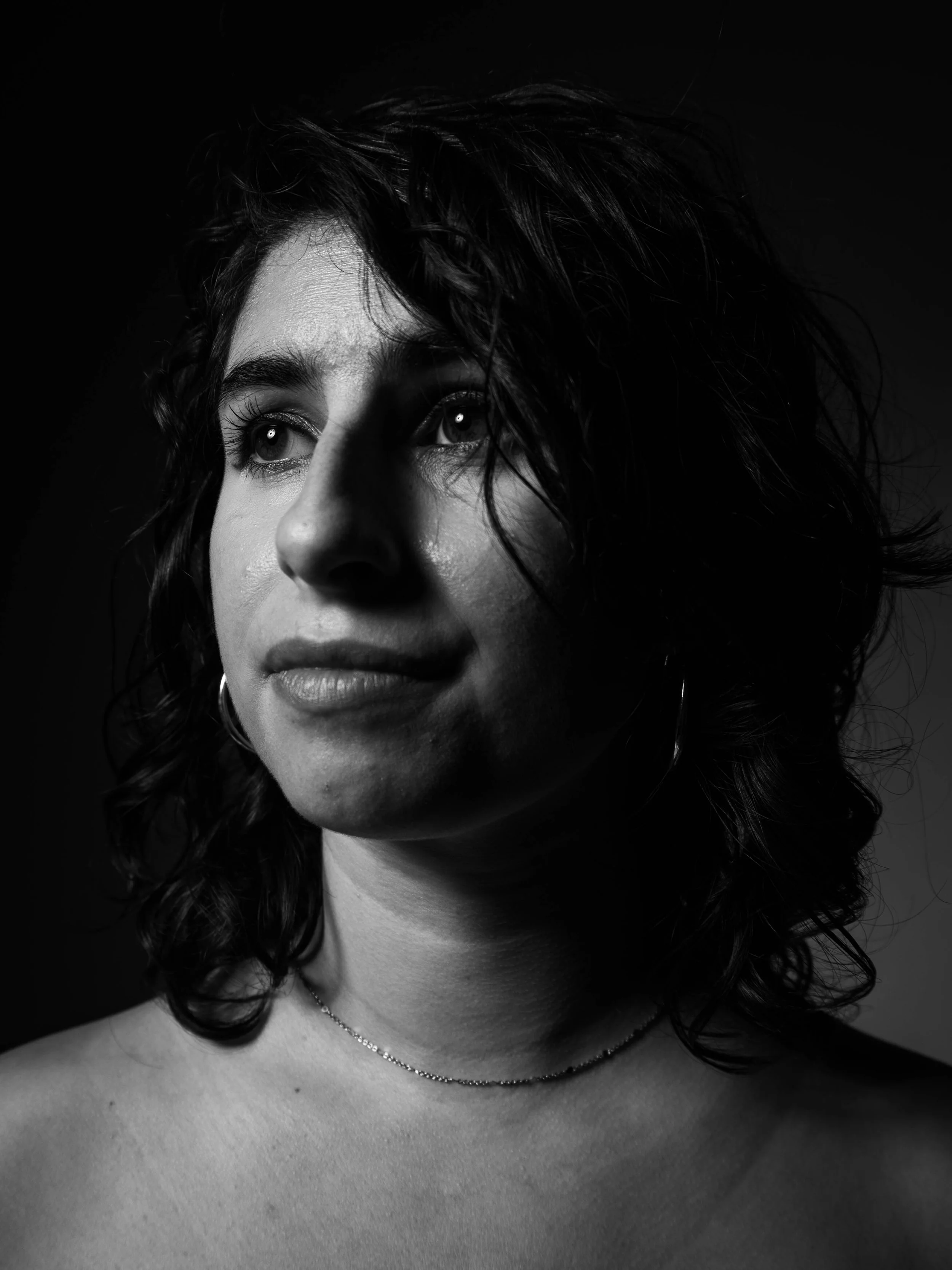
My name is Esther Hernandez.
I am from the UK. I decided to take part in Victorious Voices because although I am doing much better, I still struggle with shame about what happened to me. Sharing my story will help me accept that I am not to blame. I hope that, when I am ready to share it, it will also help other survivors know that they are neither alone nor responsible for what happened to them.
I want to challenge victim-blaming and stop the subject being brushed under the carpet, and to empower children who are currently experiencing, or at risk of experiencing, childhood sexual abuse (CSA) to get help. If children are properly educated about relationships, including abusive behaviour, and society becomes more responsive to survivors, abusers will have less power to continue harming others. Children may feel better able to speak about inappropriate or uncomfortable behaviour and receive protection before the situation escalates. Children need both the confidence to speak and the knowledge that they will be heard; one without the other does not work.
I also want to challenge everyone to be an ally. For so long, we’ve been told to be quiet and not rock the boat. As children, we relied on adults to see what was happening, listen to us and take action, but too often this did not happen. In my case, there were others before me and others after me. All the way through there were adults who knew about his behaviour and did not act. Ignoring a victim-survivor allows abuse and its consequences to continue. It is my opinion that, if you turn a blind eye, you are just as bad as the perpetrators.
Many people reading this will recognise a situation within a family, friendship group or workplace where ‘something’ has happened and the survivor has been expected to disappear. Don’t be the person that just accepts it as ‘one of those things’. If you blame victims publicly, a survivor within your circle may lose faith in you, while an abuser may feel reassured by your response. Be careful with your words and actions, take accountability for yourself and your part in ending this epidemic.
As survivors, we’ve come this far, and it has been a hell of a long road, but it cannot fall solely to us. If we, the survivors in this project, can share these experiences and make ourselves vulnerable in a world that is still hostile to survivors, I’m sure the public can cope with the little bit of discomfort it takes to do the right thing.
I would rather avoid the details of my abuse, but I will say it started when I was a toddler and ended when I was around 11. It was a male relative—someone I should have been able to trust. I spoke out because I could not endure it any longer and the potential consequences were becoming more serious each day. But it took a long time because I was worried, I’d be blamed. I think I always knew it was wrong, but I was terrified of getting in trouble, because it was always my fault if something went wrong in my house. I then experienced further sexual abuse in my teens and early adulthood, so it was hard to recover for a long time as these things just kept happening to me.
My healing started when I realised I could have ‘chosen family’. The abuser was part of my extended family, and some other members of that family covered it up. My immediate family was not a safe place for healing as there was also a lot of physical and emotional abuse. I would say to any survivor reading this that you do not owe anyone anything simply because of family ties. You are worthy of respect; it is not something you only have to give to others. Realising this and putting it into practice was a huge game-changer for me.
But I was lucky. I had some really close friends who have been there for me through thick and thin. I also had a teacher who was also a family friend who stepped in when he found out what happened. His wife also supported me and brought a great deal of understanding. As I got older, I met my amazing husband whom I can always count on.
I was terrified to disclose the abuse to him in case he ran away. But he did not: he stayed and listened. Here we are, eight years later. I love him, and he loves me. I never thought I was worthy of that. Finally, my colleagues are incredible. I work for a local charity which supports survivors and I’ve found some wonderful friends there. Seeing how all of us work in different ways to change things and fight abuse has been so empowering.
The real turning point in my recovery came when I moved out and received therapy at university—a privilege that is not equally available to everyone. Although it initially felt as though my mental health was deteriorating, that experience led me to therapy and helped me speak the truth. After my first disclosure, I was not really able to talk about what had happened. When I disclosed again, I made sure that I would not be ignored. At that point, I also learned that there were a few members of my extended family who supported me. There were only a few, but I’d rather have a smaller circle who would do the right thing than a big family who would back a child abuser over the survivor.
Through counselling, I was lucky to meet an incredible therapist who completely challenged the blame I felt and helped me to get a new perspective on things. She really empowered me and I owe much of my continuing healing to the foundation she helped me build. Eye movement desensitisation and reprocessing (EMDR) was particularly helpful for me, although everyone is different. I would say that finding a therapist you feel safe and comfortable with is most important—the relationship is the foundation of effective therapeutic work. The work you do in therapy also includes what you do outside the sessions and after therapy ends. In terms of wider reading and self-guided work, Carolyn Spring, Zoe Lodrick and Nina Burrowes have also all been helpful for me.
In terms of self-care, I initially started small. I used things that could easily be included in my daily routine—for example, a small self-care purse containing my favourite candle, whose scent I could use to ground myself, as well as breathwork and progressive muscle relaxation (PMR). Making time to be with animals has also been transformative for me.
When I was a child, being around animals was when I felt safest, both physically and in my sense of self. If a terrified rescue horse felt safe with me, then I could not be that bad, right? Nowadays, I go horse riding as often as I can, which is a huge privilege. Even seeing horses calms me. If I’m struggling, I have some great pals who will let me borrow their dog or sit with their cat for a little while. It’s the best medicine for me.
Talking to people, whilst it felt unsafe for a long time, has also been really crucial. I let my partner and best friends know what I need in advance so that, if they see me becoming overwhelmed, they can help me access my self-care techniques and leave stressful situations.
Boundaries are the most important form of self-care for me. I make sure I schedule time by myself when I can see I’ve got a busy week ahead and try not to overschedule my weeks in general. I remind myself of the child I was when the abuse happened. I now understand that being angry with her is what he would want. Showing compassion towards who I was—and who I am—is the greatest act of rebellion against what he did to me.
Dance, especially Latin dance, helped me reclaim my identity and agency because I had felt disconnected from my Latina heritage. Dance has reconnected me with my culture and improved my confidence—I even danced professionally for a while. I forget everything bad when I dance. It has also improved my body image.
I also reclaimed agency by confronting my abuser and those who covered it up. Please only do this if it is safe for you or the survivor. If you are an ally, only act with the survivor’s full consent. When I spoke to him, it was over the phone, which made it easier. I had also drunk a little too much red wine—which, in truth, made it easier—and had a whole speech planned, but the only words that came out were, ‘I’m not scared of you anymore.’ He hung up immediately, and I knew that I had taken some power back.
With the others, I sent them an email on the day of his funeral, which may seem selfish and cowardly to some, but it allowed me to say everything I needed to say and ultimately, they had covered up child abuse. It was a reckoning that needed to happen. I did not want their excuses now that he was dead; I wanted to reject them on my own terms. By doing that, I also challenged the version of himself he wanted people to remember. On the day of the funeral, I made sure that the secrets they tried to keep were front and centre. They all took away my childhood by collaborating with him; I was only returning the favour.
Working with a sexual violence support service has been deeply healing without me even realising it. I went with the hope of helping others and found something I didn’t even know I needed. It provided a healthy outlet for my rage and a safe space where I could show up as myself without judgement. My passion was respected rather than dismissed. I think this is the point at which I truly started to see myself as a ‘survivor’.
As I reflect, I also remember how he groomed me to be compliant, obey and to accept whatever he did to me. This did eventually lead me into other abusive situations and further trauma. Now I realise that he made his own downfall, and the downfall of other abusers without realising it. I now support survivors in finding justice and holding perpetrators to account. Although I could not fight him, I can now fight for others. I do not think that is what he wanted from me, and that makes me really happy.
I now define myself by the words of people I have supported, and by my colleagues who respect what I do. I do not define myself with the lies that have been told about me. I spent a lot of time really angry and turned this on myself because I couldn’t let it out anywhere else. In that regard self-forgiveness took a lot to achieve, but seeing myself not as the person I am angry at, but the child who was hurt, helped me to have compassion and shift the blame.
In terms of forgiving others, I know I will never forgive my abusers, or those who helped them. I don’t owe them that, but I am able to extend the compassion and self-forgiveness to the people I work with and my friends, so I think it’s helped me to help others too in a way.
To other CSA survivors on the healing journey, I would say:
Remember that boundaries are not simply rules imposed by other people. You can set boundaries, and you have every right to ask for what you need.
You are not to blame and will never be to blame for this. It feels like you are, but you didn’t ask for what happened and deserved so much better.
Recovery isn’t linear, and it’s okay to want different things. We don’t all have to aim for the same goals, and how we get to them is going to be different for everyone.
Having a setback does not mean that you will lose all the progress you have made. You may simply need a little time, and that is okay. It’s terrifying when we’re standing on the edge of the darkness again, wondering how long it might take to step back into the light, but you’ve done it once, and you will do it again.
You couldn’t decide what happened back then, but you can decide how to move forward. Disclosure can be frightening, and responses can vary. However, sharing can help when you are ready. If you can’t speak to those around you, there are confidential support services where listening and believing you are at the core, such as the 24/7 Rape & Sexual Abuse Support Line, SurvivorsUK and NAPAC. You are worthy of time and space, and the world is better with you in it and thriving.
It’s ok to be angry at what happened, but remember being angry at yourself, no matter the circumstances, serves the perpetrator’s purpose. Be kind to yourself. Remember that you were a child who deserved protection, compassion and empathy. Giving yourself space and grace is the ultimate rebellion against what the perpetrator wanted for you.
