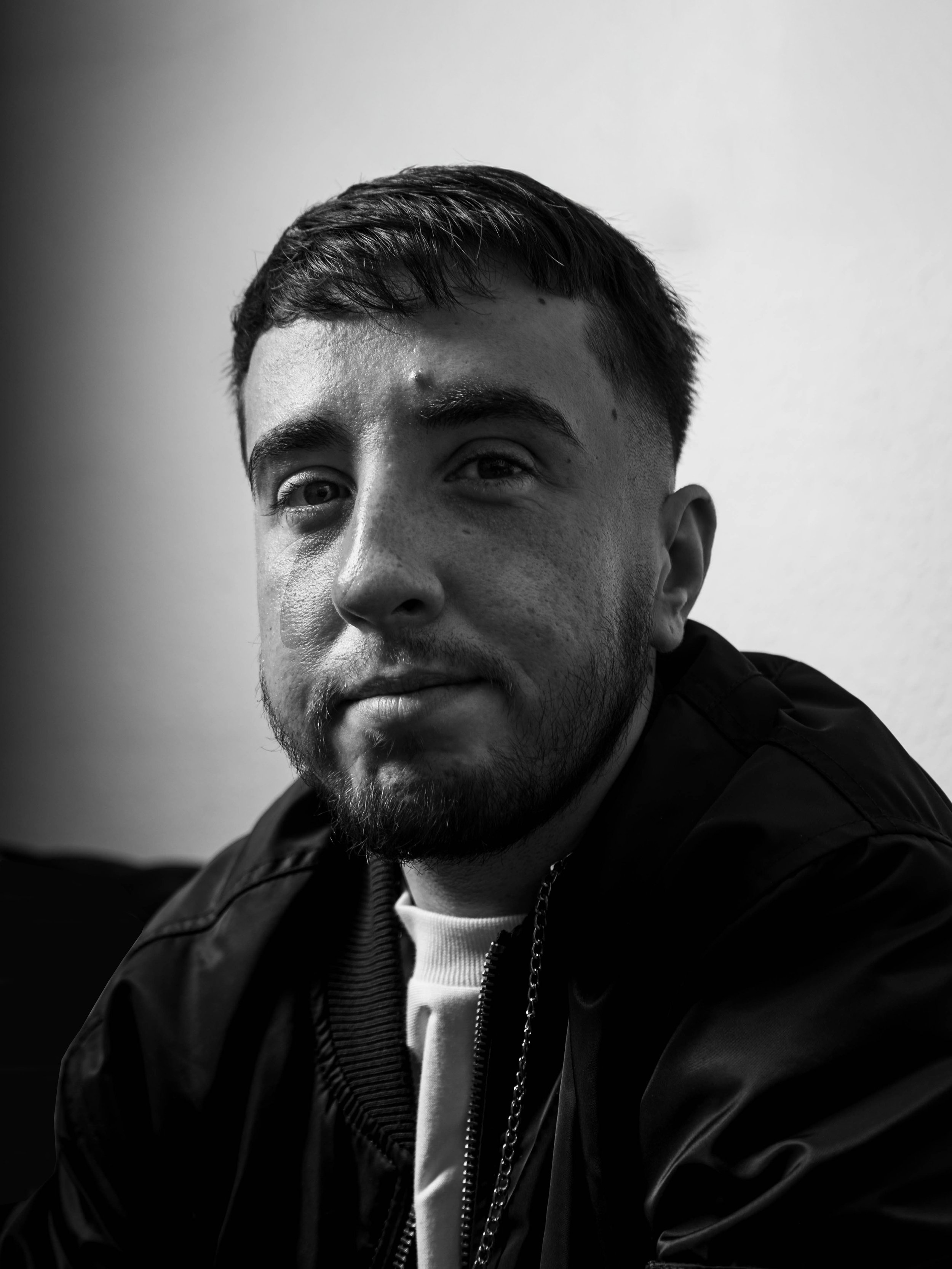
My name is Jamey Dowling
I am from Dublin, Ireland. I wanted to share my story because I think there needs to be more honesty about the messy side of reporting abuse. We often hear about the importance of speaking out and how powerful it can be, but I don’t think we talk enough about the harsh realities that can come afterwards. Reporting can be hugely significant, but it can also be an incredibly lonely experience. There can be moments when you question everything, feel isolated, and wonder what life is supposed to look like after you’ve finally told your story.
But I also want people to know that reporting your abuse isn’t the end of your story. In many ways, it’s where your life can begin again. What happens afterwards can be difficult, but you still have choices. You can decide what you want to do with your voice, your experiences and your future.
I’m most passionate about ensuring survivors know that what happened to them was not their fault and that they do not have to carry the shame or silence surrounding abuse. Children have the right to speak, to be heard and to be protected, while adult survivors deserve to know that it is never too late to tell their story. For me, using my voice through Victorious Voices means turning what happened into something that may help another person feel less alone.
I want children to know that they have the right to speak, to be heard and to be protected. And for survivors who are already adults, I want them to know that it’s never too late to find their voice. For me, speaking about childhood sexual abuse (CSA) isn’t about staying defined by what happened to me. It’s about taking back my voice and using it for something positive. If sharing my experience makes even one person feel less alone or gives someone the courage to speak when they otherwise might have stayed silent, then I feel it’s worth it.
I was sexually abused by a family member from the age of five until I was twelve. When I was a child, I didn’t understand what was happening to me. Even when I grew older and began to understand that what had happened was abuse, I still wasn’t ready to report it.
I was manipulated by members of my family into keeping what had happened quiet, and for a long time I carried the weight of it without really knowing what to do with it.
When I was seventeen, I made the decision to report what had happened. I thought that telling the truth would be the hardest part, but I wasn’t prepared for what came afterwards. I wasn’t ready for the process at all, and in many ways, reporting retraumatised me.
For around eight years afterwards, I struggled enormously. I felt like I lost myself along the way, and there were times when I didn’t know who I was outside of what had happened to me.
It’s only recently that I’ve started to find myself again. I’m beginning to understand that what happened to me is part of my story, but it doesn’t have to be the whole story. I’m still discovering who I am beyond the abuse, beyond the reporting, and beyond everything that came afterwards.
I first started telling a few close friends and my sister, although I don’t think I fully understood what I was telling them at the time. I knew that something had happened to me, but I don’t think I had the understanding or language to fully recognise it as abuse.
Eventually, I ran away. I left a note saying that I wouldn’t come back until he was gone. I was found and brought home, and that’s when I finally sat down with my mam and told her, briefly, what had happened.
I remember being given a choice that no child should ever have to make. I was asked whether I wanted to keep what had happened between us, or whether I wanted my cousins to lose their dad because he would have to go to prison. I chose to keep it between us. At that age, I didn’t understand that the responsibility for what happened belonged entirely to him, not to me.
I don’t think I ever really believed that people would believe me. In fact, some of my family doubted me from the beginning, and that was incredibly painful. Even after he was found guilty, some people still couldn’t accept what had happened.
Looking back, I think that was one of the biggest reasons speaking out was so difficult for me. I wasn’t just fighting to tell my story—I was fighting against the fear that nobody would believe it.
After the court case, people around me would tell me that it was finally time to move on. But I didn’t know how to do that. I couldn’t wrap my head around everything that had happened, or understand where I was supposed to go from there. I felt like everyone else had decided that a chapter of my life was finished, while I was still trying to understand what had happened to me.
Eventually, I stopped having contact with people I knew and completely shut myself off. I became very isolated, and for a long time I was just trying to get through life rather than actually healing.
It wasn’t until last year that someone helped me come to an important realisation: this wasn’t something I was simply supposed to “move on” from. It was something I had to learn to live with. That distinction changed the way I looked at my experience. I didn’t have to forget what happened or pretend it hadn’t affected me. I could acknowledge it, carry it differently, and still build a life beyond it. Eventually, I want to use my experience to advocate for other children who find themselves in situations like mine. No child should ever have to experience something so horrific, and no child should have to feel that they have to carry it alone.
For me, talking has been a huge part of healing. Hearing another person’s perspective can help me see things differently. For a long time, I thought that silence and constant busyness would make everything go away, but I was avoiding my feelings rather than dealing with them. Learning to acknowledge those emotions, sit with them and eventually let them pass has been one of the hardest and most important parts of my recovery.
Going into the reporting process, I had a strong support system around me. As my mental health deteriorated, however, I began cutting people off. By the time I had made it through court, only a couple of people remained in my corner. I thought I was protecting myself, but in reality, I had isolated myself almost completely.
More recently, I’ve started reaching out to old friends and family again, and my support system has grown massively. I have lost people along the way, and there are people I probably never expected to lose, but I’ve also gained some incredible people who have shown me what genuine support looks like.
My relationship with family has been complicated. There were family members who weren’t supportive of me, and some even sat on the opposing side of the courtroom. For years, I carried a lot of anger and hatred towards them. I’ve had to work through those feelings and accept that I can’t change what people chose to do.
I’ve also come to realise that, for me, family isn’t only about who you’re related to by blood. Family is about who chooses to stay, through the good, the bad and the ugly. Sometimes the people you gain along the way can become more important than the family you were born into.
I tried therapy for years, but for a long time I was very selective about what I actually said. I could never bring myself to feel comfortable enough to fully talk about what had happened. I would give brief details, and if a therapist said something I didn’t like or challenged me in a way I wasn’t ready for, I simply wouldn’t go back. I moved from therapist to therapist without ever really allowing myself to be completely open.
It was only as I got older that I realised something important: you can disagree with your therapist. You can challenge what they say, question their opinions and tell them when you don’t agree. In fact, therapy can be one of the safest places to finally have a voice.
I learned that no matter what you want or need to say, even if you think it’s outrageous, embarrassing or uncomfortable, you should say it. Sometimes you have to get past those awkward conversations and the differences of opinion, because being completely honest is what can make therapy genuinely helpful in the long run.
Outside of therapy, I also watched a lot of films and documentaries about sexual abuse. That might seem like an unusual part of healing, but for me it helped me understand what had happened to me and, importantly, why some of the people around me reacted in the ways they did.
Understanding the wider reality of abuse helped me make sense of parts of my own experience that I had struggled to understand for years. Looking back, I do think that learning through those films and documentaries became a really important part of my healing. I think the biggest thing I learned is that I couldn’t begin to heal while constantly editing myself. I had to give myself permission to say the things I had spent years being afraid to say.
For a long time, I felt that what happened to me had become a defining part of who I was. Reclaiming my identity has been about realising that what happened to me was something I experienced, but it is not who I am. A big part of that has been finding my voice and learning that I am allowed to have opinions, boundaries and needs.
Therapy played a part in this, although it took me a long time to become comfortable enough to genuinely speak openly. As I got older, I began to understand that I didn’t have to simply agree with people. I could question them, disagree with them and say when something wasn’t right for me. Learning that I was allowed to have a voice, even in situations where I felt vulnerable, gave me back a sense of control.
I’ve learned that self-care isn’t always about doing something positive or enjoyable. Sometimes it is simply recognising when I need space, allowing myself to feel what I’m feeling and not forcing myself to be okay before I’m ready.
I’ve learned the importance of having people and spaces where I can be honest without feeling judged. I also know that I don’t owe everyone my story and can decide what I share and with whom. Most importantly, I’ve tried to become more understanding of myself. Healing isn’t a straight line, and I’ve learned that having difficult days doesn’t mean I’ve gone backwards.
One of the biggest turning points was realising that I didn’t have to remain silent or allow other people to determine how I should feel about what happened to me. Another turning point came with therapy. For years, I would only share small pieces of information and would move on if I felt uncomfortable with what a therapist told me. As I got older, I realised that therapy could actually be one of the safest places to disagree, question things and practise having a voice. That changed the way I approached it.
I’ve also found that speaking with other survivors and becoming interested in survivor-led support has changed the way I see my own experience. Seeing that something painful can eventually become a reason to support someone else has given my experiences a different meaning.
Healing hasn’t been a straightforward journey. There have been times when things I’ve experienced or emotions I’ve felt have brought me back to places I thought I had already moved beyond. I’ve also struggled with trusting people and with allowing myself to be vulnerable.
One of my biggest challenges was accepting that I couldn’t control every part of my healing. I used to think that if I could avoid certain feelings or situations, I could avoid being hurt by them. Over time, I’ve learned that avoiding things doesn’t necessarily make them disappear.
I’ve tried to overcome setbacks by reminding myself that having a difficult period doesn’t erase the progress I’ve made. I’ve learned to give myself time, talk when I’m able to, and try again rather than seeing a setback as a failure.
I’ve learned that forgiveness isn’t something I owe anyone, and it doesn’t have to be part of healing. Forgiving myself has been far more important. I have questioned how I responded, what I said or didn’t say, and why I handled certain situations as I did, but I was doing the best I could with the understanding I had at the time. For me, healing means taking back control of my life rather than forgiving someone who hurt me.
I would tell other survivors that there is no correct way to heal and no timeline they have to follow. You don’t have to talk about anything before you’re ready, and you retain the choice of whether, when and how to speak.
I’d encourage survivors to find someone they genuinely feel safe with, whether that’s a professional, another survivor or someone they trust. And if the first person you speak to doesn’t feel right, that doesn’t mean you should give up on finding the right support. Finding the right person can take time.
I’d also say that you’re allowed to question people who are trying to help you. You’re allowed to disagree. You’re allowed to say something isn’t working for you. Your voice matters. Having a voice doesn’t mean you have to be confrontational; it means recognising that you are an equal participant in your own healing.
Most importantly, I would tell other survivors: what happened to you is not the entirety of who you are. You are allowed to build a life beyond what happened to you, and you are allowed to become someone who isn’t defined by your trauma.