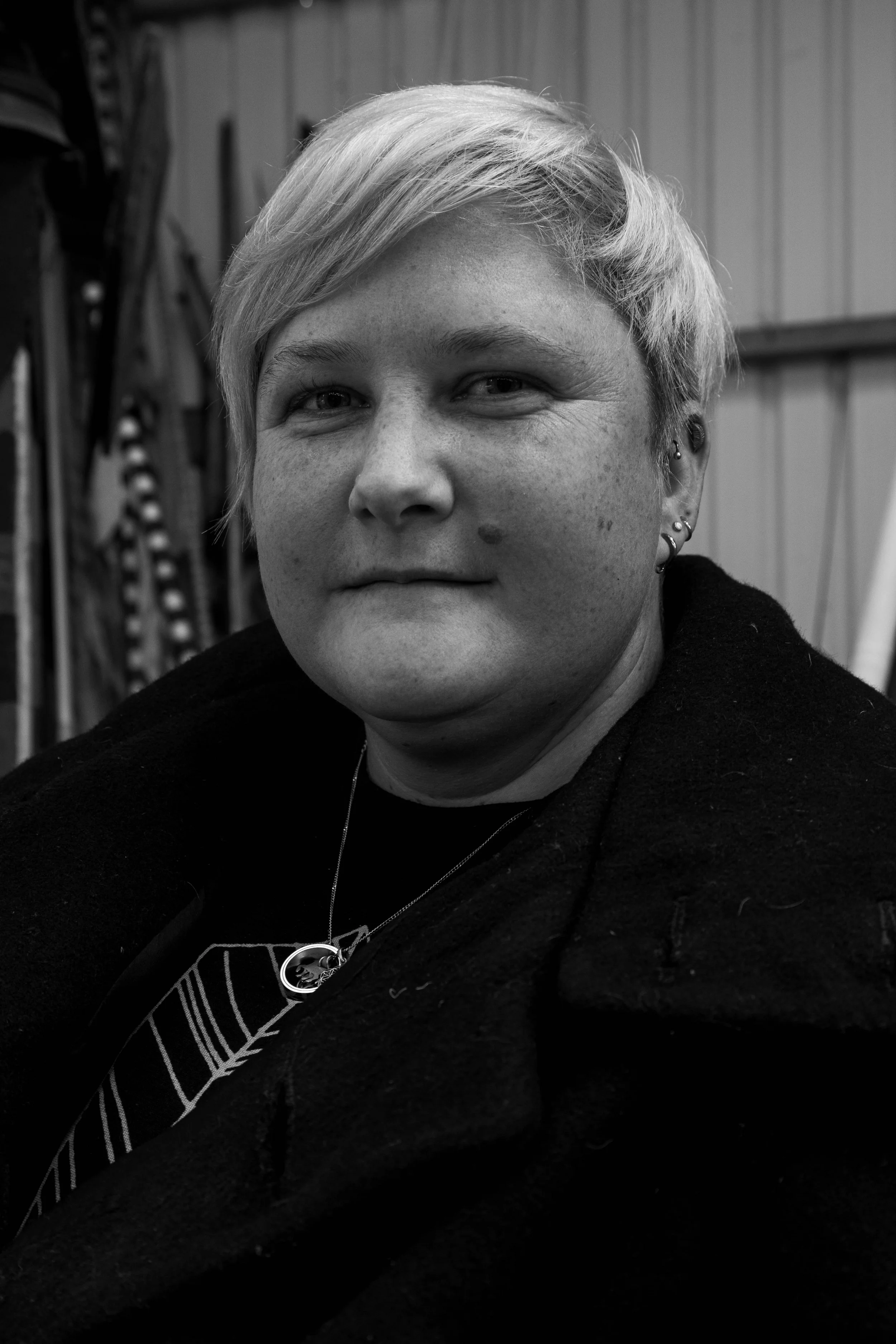
My name is Kat Mackay.
I am from near Lockerbie and currently live in the Scottish Borders, UK. I decided to take part in Victorious Voices over the past five years, alongside intensive therapy, authenticity and unmasking have become major focuses for me. As a partial dissociative identity disorder (P-DID) system, finding authentic ways to share our story—and the ways trauma has affected and continues to affect daily life—is a priority. I hope that sharing our experience will help us find a supportive community and allow others to find something healing in my story.
I was becoming furious at the way power and money can protect perpetrators, particularly those who are well known or wealthy. At the same time, I found it increasingly difficult to heal my shame while continuing to treat the secret as shameful and censoring my story so that others could not identify the perpetrators.
I have found so much solace and comfort in the words of others sharing their experiences of trauma and recovery. There is no community where I feel as understood as the childhood sexual abuse (CSA) community. The sense of belonging and of not needing to pretend is palpable. At the same time, CSA is frequently silenced, and its prevalence and the kinds of people who commit abuse are often denied. It is important for those of us who can be visible to draw attention to the prevalence of CSA, so that it is taken more seriously and children are better protected in real time.
I experienced childhood sexual abuse by people in positions of care and by other perpetrators who were unconnected to one another. This included grooming, shaming, enforced watching of sexual material, sexual assaults and rape. This began in early childhood and continued through my teens. The first time I shared abuse was in a conversation with a colleague I lived with, I was talking about how and why I had been triggered so badly by an episode of The Bill where someone was raped. That was when I was nineteen. I told a trusted friend a year later, again after they had seen me be triggered. Three years after that I entered therapy for the first time. That was 17 years ago.
I took my first steps towards healing when I attended transactional analysis therapy for four months while completing my undergraduate degree. After a gap, during which I moved home following graduation, I accessed counselling through Student Services when I began a PhD. From there, I moved into psychodynamic therapy with a clinical psychologist, followed by cognitive analytic therapy (CAT) with his PhD student.
There was then a gap while I was in an abusive relationship. Afterwards, I entered trauma therapy, including Parks Inner Child Therapy (PICT), Cognitive Processing Therapy (CPT) and Narrative Exposure Therapy (NET), followed by Eye Movement Desensitisation and Reprocessing (EMDR) and then Dialectical Behaviour Therapy (DBT). The most significant healing has come through DBT and, over the past year, through Comprehensive Resource Model (CRM) therapy with Rape Crisis. Through this work, I have felt fully understood, believed and listened to for the first time.
I have found community in survivor groups both online and in person, and online forums have always been incredibly helpful. Over the years, I have relied on the Rape Crisis and Samaritans helplines and, more recently, the NAPAC helpline. I have some friends who I can be fully authentic with, who know everything I have experienced, and who have seen me at my most triggered. I carry a crisis kit containing my safety plan and a range of comforting and grounding items, including snap ice packs that I use as part of the TIPP skill in DBT. The Check the Facts skill has also been extremely helpful. At home, I have painted meaningful quotations and affirmations onto my kitchen cupboards as comforting reminders. I also use Ocean and Earth Breathing and body anchoring from Comprehensive Resource Model therapy.
Having friends and found family who have accepted me when I have been most triggered—especially those who have witnessed the full truth of the abuse—has been deeply affirming. My family does not know the details of my abuse history or the trauma symptoms I experience. My most recent therapist, in particular, has changed my life by welcoming my plurality, witnessing details I had felt too ashamed to share with anyone else and giving me grounding resources. The helplines I call have been there through so many days and nights, holding and reassuring me for long enough to help me stay another day.
It took me a very long time to reclaim my sense of identity and agency. This remains a work in progress and is still relatively recent, as I did not leave my abusive relationship until 2020. For over a year, I grappled with the feeling that reality was not mine to define, particularly when nobody else remembered events as I did—or when only an abuser and I had been present. After a great deal of talking and crying, and committing to finding my authenticity, I began to feel able to hold on to my identity and agency. I wrote a poetry collection documenting my trauma, entered more intensive therapy and began ensuring that the people I regularly spent time with knew and understood at least a little about my experiences and how they continued to affect me. I am now very open online about how I experience the world, and I am writing a book exploring how horses saved me at different points in my life and the trauma I was living through at those times.
The most important part of my self-care practice is walking as regularly as my chronic illnesses allow. I used to run, including hill running, but I am no longer able to do so. Walking allows my mind and body to reset, and I sometimes use that time to call helplines when I need support. Because restrictive eating has been an issue in the past, the PLEASE skill—particularly eating regular, nutritious meals—has been invaluable, as has ensuring that I get enough sleep and rest. A regular mindfulness and meditation practice has been important not only for healing but also for survival, both during and after the abuse. Self-validation and affirmations have also been life-affirming and sustaining, as has consistently recording glimmers of joy and gratitude in my journal.
There have been many moments and experiences that have served as turning points in my recovery. Some notable ones include:
Calling Rape Crisis for the first time and talking about what happened, which opened the door to essential helpline support.
Having a friend ask questions without judging me or shying away from the details of the abuse.
Reporting to the police, after his death, the man who groomed and raped me as a teenager.
Seeking and remaining in therapy despite the opposition of an abusive partner.
Leaving that abusive relationship.
Turning back towards the car after standing in the sea for hours, trying not to think about the joy and love I had experienced since my previous suicide attempt.
Engaging in regular adult–child dialogue.
Following where newly emerging memories from early childhood led me.
Seeking an NHS assessment and therapy, which resulted in a diagnosis of complex post-traumatic stress disorder (CPTSD) and access to Eye Movement Desensitisation and Reprocessing (EMDR) therapy.
Accessing in-person support from Rape Crisis and Comprehensive Resource Model (CRM) therapy.
Spending a year speaking to helplines while grappling with finding safety in the knowledge that my memories were valid, even if the abusers did not believe they had done anything wrong.
Being hugged by a support worker the first time I allowed myself to sob openly in front of someone else.
Holding my therapist’s hand as I spoke aloud about the early memories I had felt so painfully ashamed of and afraid to face.
Seeking an assessment for dissociative disorders and receiving a diagnosis of partial dissociative identity disorder (P-DID).
By far the greatest challenge for me has been shame. It has taken many, many cycles of returning to feelings of shame—the belief that I was disgusting and useless and that the abuse was my fault. Only through consistent support and care, and more recently through self-validation, have I moved closer to feeling less shame. It feels like this will always be a work in progress, but there is more joy, safety and happiness in my life now than I ever dreamed would be possible.
I definitely felt that I could not be forgiven for my feelings of shame and stupidity. I have carried the weight of feeling disgusting. This weight has been steadily decreasing over the last five years of intense therapy, but it remains a work in progress. Although forgiving others, particularly for their behaviour, is not something that preoccupies me, I have struggled with the questions: Why? What was wrong with me? What were they thinking? These questions torment me less often now, and that feels like progress.
My advice to other CSA survivors would be to seek and treasure those people who can sit with your darkness, whether the relationship is professional or personal. For me, the compassionate and non-judgemental witnessing of my most ‘shameful’ experiences has allowed me to move forward in my healing.