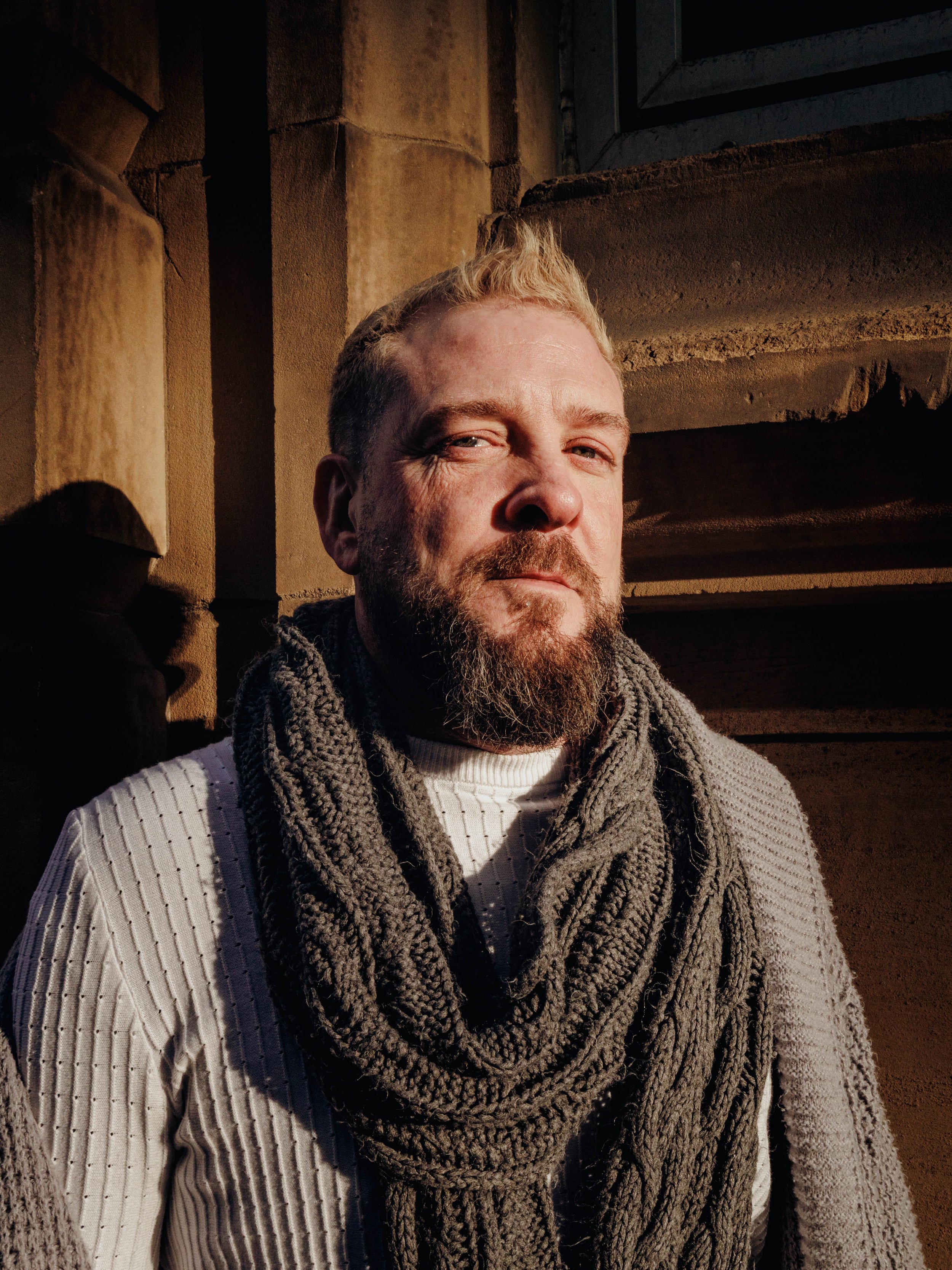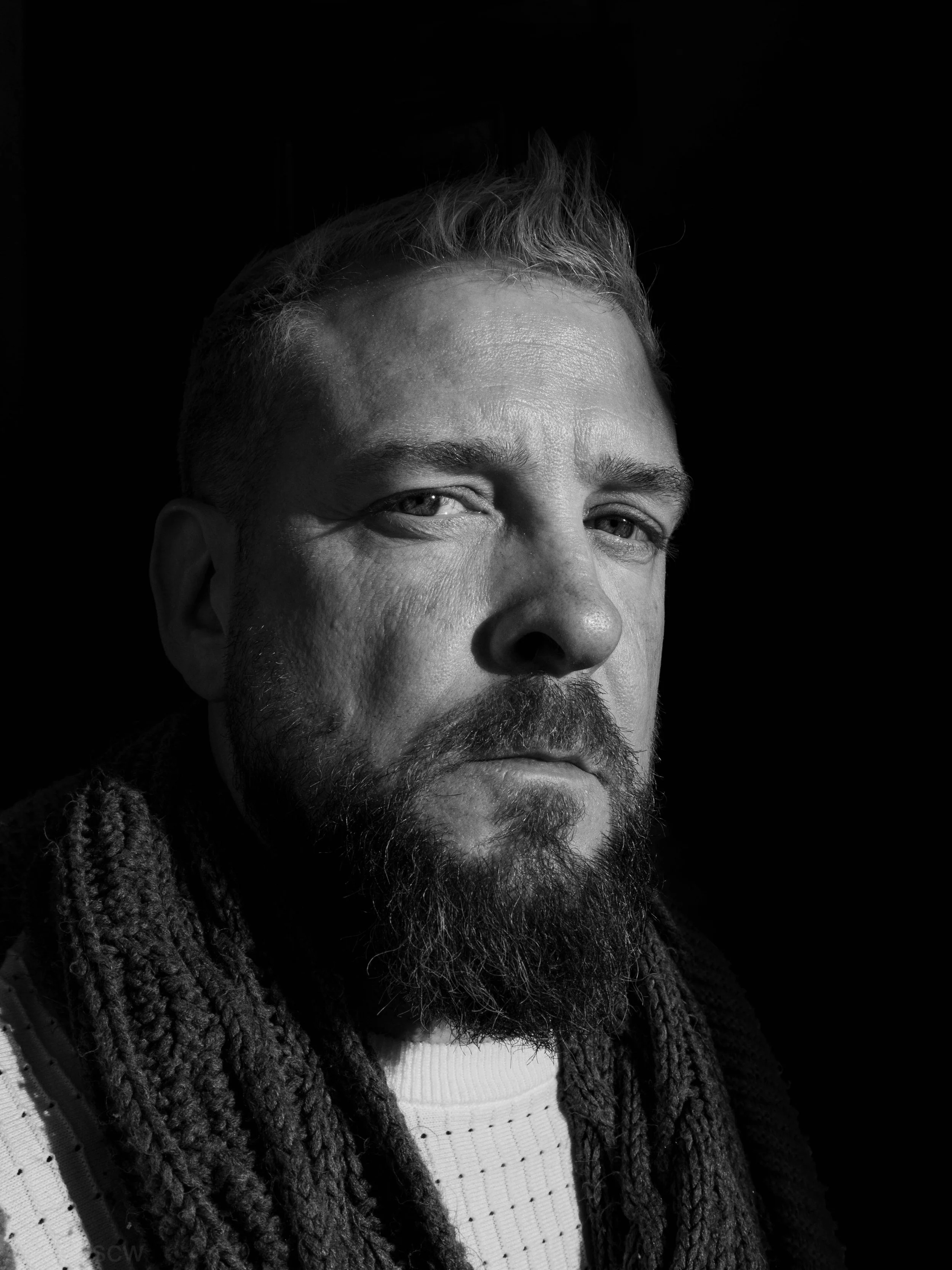
My name is Banksy.
I’m from Manchester, UK. I decided to take part in Victorious Voices because I wanted to share my name and my story in a way that does not frame me as a victim or a broken person. I want to show other survivors of childhood sexual abuse (CSA), particularly men, that they do not have to carry their experiences alone. I want people to understand that we are more than our trauma and that our experiences of abuse do not define us.
I suffered for many years because I felt that I had nowhere and no one to turn to with my experiences of abuse. I want to show others who feel that way that support and better options are available. The changes we need will only come when people start talking about this widespread problem in society.
I was abused by a close family member between the ages of six and ten. I made a promise to my brother that I would seek support for the effects of the abuse. Sadly, my brother took his own life just six weeks later. Keeping my promise to him has been a driving force for me ever since.
The first step in my healing was receiving therapy through Survivors Manchester, now known as We Are Survivors, after a previous counsellor referred me to its Healing Steps programme. I later joined The Safe Room, a peer-support group run by the organisation. I have made lifelong friends from the group, and one of my proudest moments was completing a 10K run to raise money for the charity. This was the first time I shared publicly that I am a CSA survivor, and it felt very liberating.
My main coping strategies are being active and present: walking, spending time with friends and family, and listening to music. They help centre me and calm me; I enjoy the sense of connection these activities bring me. The beauty of these strategies is that they are free and accessible; I can use them whenever I need them.
I have had several therapists during my healing journey, and each provided a space in which I felt seen and heard. These sessions were my first experience of empathetic listening. I felt understood, which in turn gave me a voice with which to share what I had been through. My immediate family and close friends have been incredibly caring and understanding. They have been there for me throughout, giving me the confidence to accept what happened to me. Their support has given me the space to be myself, with all that entails. It has allowed me to integrate my traumatic experiences into my sense of self, see beyond them and enjoy my life.
The most helpful resource for me has been the peer-to-peer support group I previously mentioned. I have also had a fantastic Independent Sexual Violence Adviser (ISVA), who has fought my corner fiercely and provided me with great support at a time when I really needed it. Together, the peer-support group and my ISVA have been the most beneficial sources of support I have received.
All this support has been a constant reminder that I am more than my trauma. Slowly, I have developed an awareness that I am more than my abuse, that it does not define me and that it does not have to hold me forever. I have difficulty putting this into words because it is more of a feeling that I cannot really describe. One tangible example is my decision to begin a counselling course at Bury College and train to become a counsellor to help others. This is my goal and the reason I do everything I’m doing, including sharing my story here.
I developed self-care practices by addressing my trauma in a safe space where I could regulate my thoughts and feelings. I learnt how to ground myself and recognise when I had been triggered. I then developed skills for managing those triggers, which helped prevent them from causing me to disengage from everyday life. This has been a slow process, but at times, positive ways of coping have clicked into place almost instantly. I also recognise when I need to sit with difficult emotions, and I allow myself the time and space to do that before moving forward. It is important that I process these difficult emotions rather than suppress them.
When my brother died, I was determined to keep my word to him and find what worked for me. This led me to the services provided by We Are Survivors, which proved life-changing. I also took part in the Coventry University-led MESARCH study. It was another turning point because I learnt a great deal about abuse and about myself. It helped me find my voice and realise that I was not alone in these experiences. This new knowledge gave me the courage and confidence to use my voice. On a personal note, recently becoming a grandad has been an amazing experience. It has given me a renewed sense of vigour and belonging, for which I am extremely grateful.
One of my biggest challenges has been self-doubt. There have been times when I have questioned whether I should speak publicly about my experiences and whether speaking out is the right way for me to create change. Silence is so ingrained in society that, at times, it made me feel as though I was wrong for speaking out.
The biggest setback in my journey was the CPS decision to take no further action (NFA) in 2021. For context, reporting to the police is a very difficult process. You are baring your soul, so it is a huge blow when an NFA decision is made. When I received this news, it sent me into a downward spiral that left me suicidal and at the lowest point of this journey. Although it was awful to experience, it also became a turning point: I realised that I did not want this decision to defeat me.
It was a huge disappointment to put myself through the police process, give evidence, and relive my trauma, only for it to go nowhere. That spiral helped me realise that the love of my friends and family mattered more to me than any justice the courts could provide. My act of justice now is to become the best version of myself—for me and for my family.
I have absolutely found forgiveness for myself. I believe this is where true forgiveness starts. I forgive myself for my past thoughts: the times when I believed that I was dirty and deserved the abuse. I also forgive myself for my past transgressions. Many arose from a place of survival and do not reflect who I truly am. Forgiving others is more complex for me. I do not forgive my perpetrator, and I don’t think I ever will. At present, I cannot see that happening. That may change in five years, but I doubt it. For now, my focus is on forgiving myself so that I can grow.
My main advice, particularly to survivors at the beginning of this journey, is that you possess far more strength and courage than you realise. The path to recovery is like climbing a ladder: take one step at a time. Do not try to jump ahead. Take your time and focus on what you need to do to reach the place you want to be. For me, that was a place of peace and contentment with myself and my experiences. I want to spread hope that there is more to life after abuse.
It does not define you.